Space Lightning: A Rare Red Flash That Isn’t an Alien Invasion
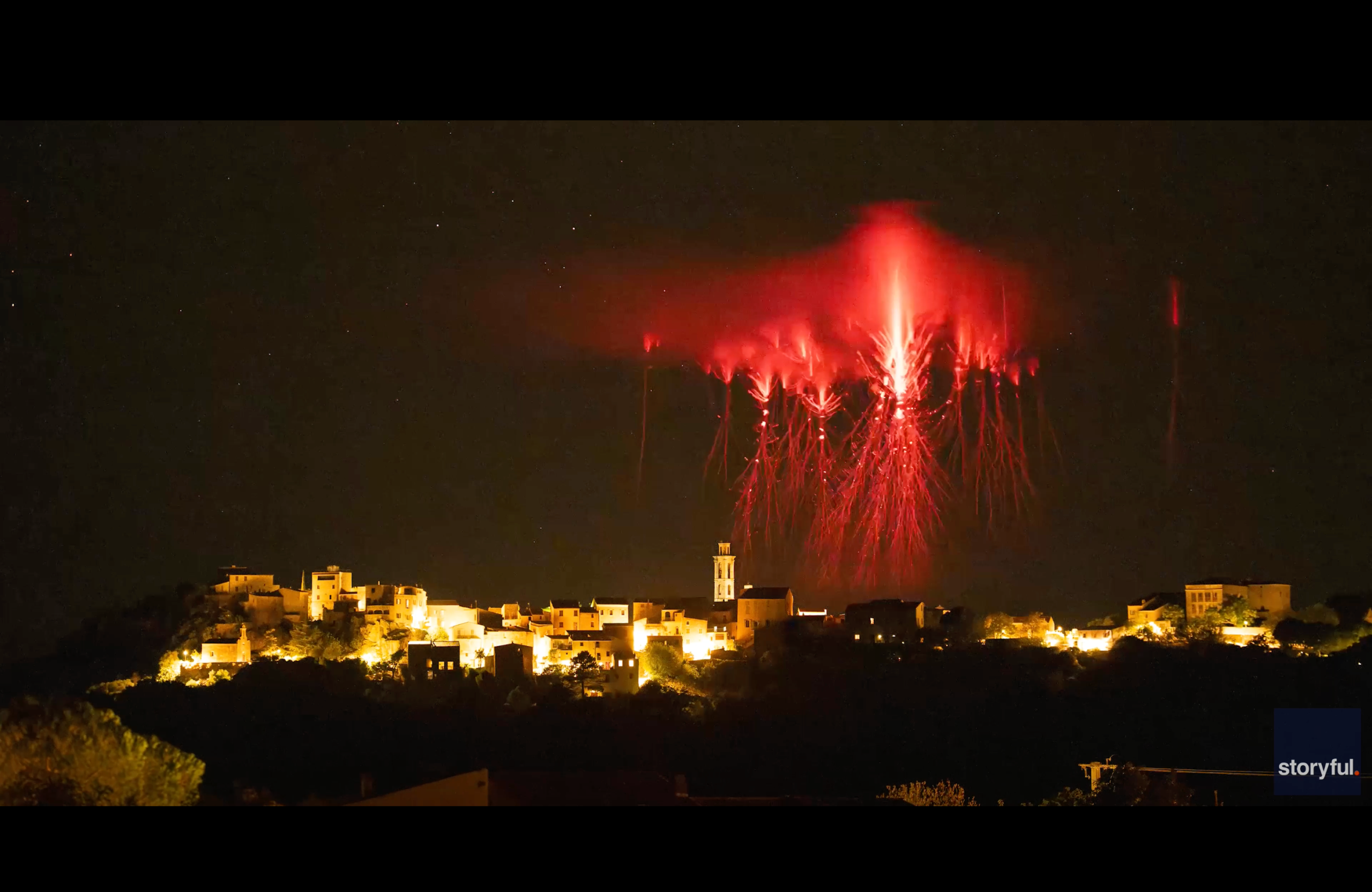
Social media feeds lit up this week after a mysterious crimson flash pulsed high above a distant thunderstorm, prompting a wave of breathless speculation about visitors from another world. The truth is far more fascinating — and entirely terrestrial. The phenomenon, widely known as space lightning, is a rare upper-atmospheric electrical discharge called a red sprite, and it occurs far above the storm clouds that spawned it.
According to the source report, the event unfolded on Friday, October 16, 2026, when observers captured a brilliant red burst towering over a thunderstorm complex. While the display looked otherworldly, meteorologists were quick to confirm it was a textbook example of transient luminous events (TLEs) — electrical phenomena that dance through the mesosphere and lower ionosphere, dozens of miles above the thunderheads we see from the ground.
Executive Summary: What Happened and Why It Matters
In short, a powerful thunderstorm generated an intense positive cloud-to-ground lightning strike. That strike sent a massive electromagnetic pulse upward into the upper atmosphere, where it excited nitrogen molecules and produced a fleeting red glow. The result: a spectacular, split-second display of space lightning that lasted only milliseconds but left a lasting impression on everyone who saw it.
- What: A rare red sprite, a form of space lightning, observed above a distant thunderstorm.
- When: Friday, October 16, 2026.
- Where: High in the mesosphere, roughly 30 to 55 miles above the storm.
- Why it matters: These events help scientists understand the electrical coupling between Earth’s surface weather and the upper atmosphere.
The Atmospheric Science Behind Space Lightning
To understand space lightning, you first need to understand the vertical structure of Earth’s atmosphere. Most weather — clouds, rain, hail, and the lightning we see in a typical storm — occurs in the troposphere, the lowest layer. But above it lies the stratosphere, and above that, the mesosphere, where temperatures plunge to around minus 130 degrees Fahrenheit.
When a particularly strong positive lightning stroke occurs — the kind that carries a much larger charge than a typical negative strike — it can create an electric field strong enough to ionize the thin air high above the storm. Nitrogen molecules in the mesosphere absorb that energy and release it as a red glow, producing the carrot-shaped or jellyfish-like forms that characterize red sprites. Because the air up there is so thin, these discharges can stretch for tens of miles vertically while remaining invisible to the naked eye unless you’re looking at exactly the right moment.
Why Red Sprites Are So Elusive
Space lightning is notoriously difficult to observe for three reasons:
- Speed: A red sprite lasts only a few milliseconds — far too fast for the human eye to register clearly.
- Altitude: They occur high above the storm, often hidden behind cloud cover from a ground observer’s perspective.
- Brightness: They are dim compared to ordinary lightning, requiring low-light cameras or specialized instruments to capture.
That combination is why most confirmed sightings come from high-speed cameras, aircraft, or astronauts aboard the International Space Station. When a clear video does surface, it almost always sparks the same reaction: awe, confusion, and — inevitably — speculation about extraterrestrial activity.
Regional Impact and Resident Safety Precautions
While space lightning itself poses no direct threat to people on the ground, it is a reliable indicator that a powerful thunderstorm is nearby. The same storm that produced the red sprite likely generated intense cloud-to-ground lightning, heavy rain, and possibly hail or damaging winds at the surface.
Residents in the affected region should treat any storm capable of producing space lightning with serious respect. Here’s what to keep in mind:
- Stay indoors: If you can hear thunder, you are close enough to be struck by lightning. Remain inside until 30 minutes after the last rumble.
- Avoid open areas: Parks, golf courses, and bodies of water are especially dangerous during active thunderstorms.
- Unplug sensitive electronics: Power surges from nearby strikes can damage appliances and devices.
- Keep pets inside: Animals are just as vulnerable to lightning strikes as humans.
- Monitor official alerts: Follow guidance from the National Weather Service and local emergency management agencies.
It’s also worth noting that space lightning is not a sign of anything supernatural or extraterrestrial. It is a well-documented meteorological phenomenon that has been studied for decades, and its appearance above a storm is simply a sign that the storm is electrically intense.
Interactive Radar and Tracking Advisory for Space Lightning
Because space lightning occurs above the cloud tops, standard Doppler radar cannot detect it directly. However, radar remains your best tool for tracking the thunderstorms that produce it. When you see a strong storm cell with intense reflectivity on radar, particularly one with a history of frequent positive cloud-to-ground strikes, the odds of a red sprite increase.
Here’s how to use radar and tracking tools effectively:
- Watch for intense cells: Storms with reflectivity above 50 dBZ and a history of severe warnings are prime candidates.
- Check lightning detection networks: Services that distinguish positive from negative strikes can help identify the most electrically active storms.
- Use low-light cameras: If you’re safely indoors and far from the storm, a tripod-mounted camera with a wide-angle lens can occasionally capture sprites.
- Follow space weather and upper-atmosphere monitors: Some research networks publish sprite observations in near real time.
Remember: never chase a storm to photograph space lightning. The safest way to observe these events is through official imagery and videos shared by researchers and storm chasers who are trained to handle severe weather.
Frequently Asked Questions About Space Lightning
Is space lightning dangerous to people on the ground?
No. Space lightning, or red sprites, occurs tens of miles above the Earth’s surface and poses no direct threat to people. However, the thunderstorm that produces it can be extremely dangerous, so follow standard severe weather safety rules.
How often does space lightning occur?
Red sprites are relatively common globally, occurring thousands of times per day, but they are rarely seen because they are brief, dim, and often hidden by clouds. Documented sightings from the ground remain rare.
Can I see space lightning with the naked eye?
It’s possible but difficult. Because a red sprite lasts only milliseconds, most people miss them. Low-light cameras and high-speed video are far more reliable for capturing the phenomenon.
What causes the red color of space lightning?
The red hue comes from nitrogen molecules in the mesosphere. When they are excited by the electromagnetic pulse from a strong positive lightning strike, they emit energy in the red portion of the visible spectrum.
Looking Ahead: Why Space Lightning Matters
While the viral videos may frame space lightning as something mysterious or even alien, the science tells a different story — one of Earth’s atmosphere operating as a vast, interconnected electrical system. Understanding these upper-atmospheric discharges helps researchers refine models of atmospheric electricity, improve radio communication reliability, and better understand how energy moves between the surface and the edge of space.
So the next time you see a strange red flash above a distant storm, don’t reach for the sci-fi theories. Reach for the radar, check the storm’s intensity, and appreciate the rare and beautiful physics unfolding miles above your head.
Frequently Asked Meteorological Questions
No. Space lightning, or red sprites, occurs tens of miles above the Earth's surface and poses no direct threat to people. However, the thunderstorm that produces it can be extremely dangerous, so follow standard severe weather safety rules.
Red sprites are relatively common globally, occurring thousands of times per day, but they are rarely seen because they are brief, dim, and often hidden by clouds. Documented sightings from the ground remain rare.
It's possible but difficult. Because a red sprite lasts only milliseconds, most people miss them. Low-light cameras and high-speed video are far more reliable for capturing the phenomenon.
The red hue comes from nitrogen molecules in the mesosphere. When they are excited by the electromagnetic pulse from a strong positive lightning strike, they emit energy in the red portion of the visible spectrum.